Your Heart Cares. Your Mind Panics. This Guide Brings Calm.
You can love deeply without overthinking every little thing.
Discover how to quiet the endless "what ifs," stop overanalyzing every message and conversation, and create more space for peace, confidence, and emotional clarity in your relationships.
You don't have to stop caring so much. You don't have to become emotionally distant. And you don't have to keep exhausting yourself trying to figure out what every little thing means.
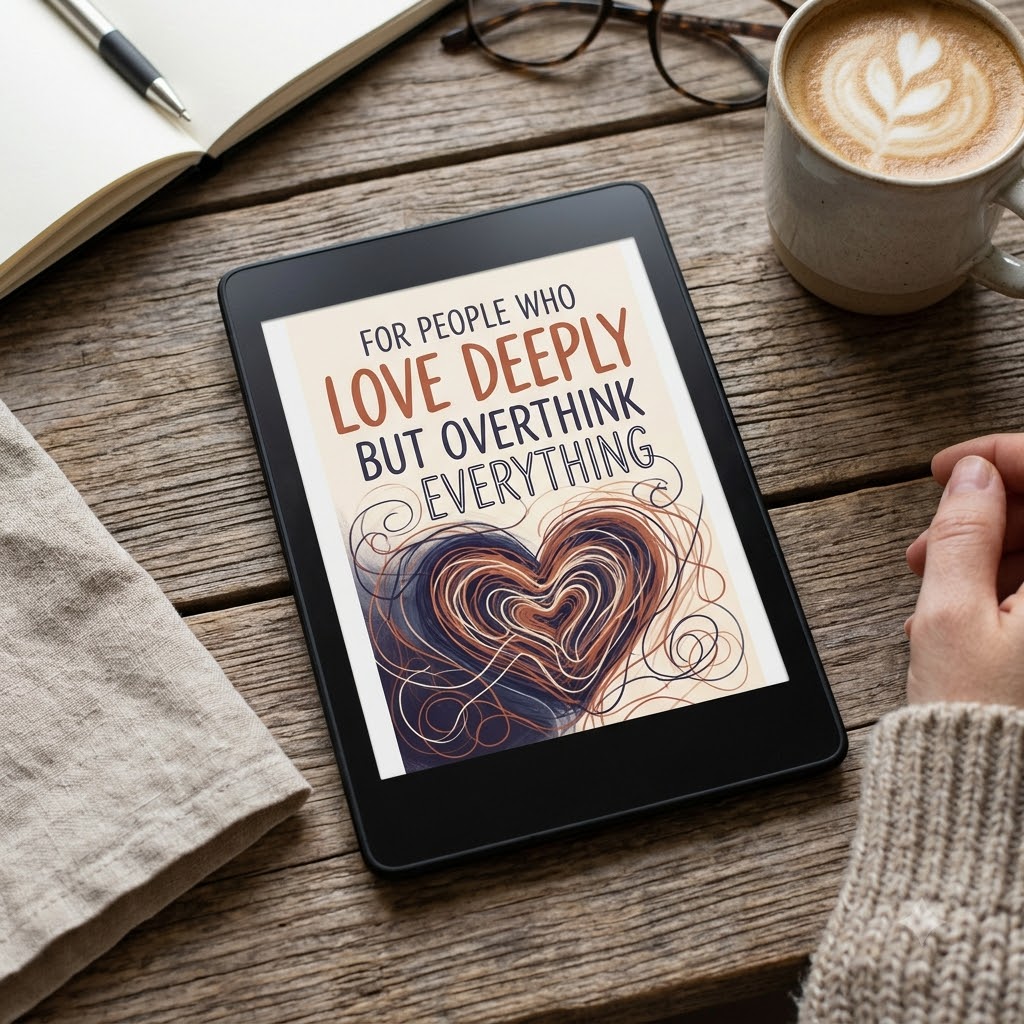
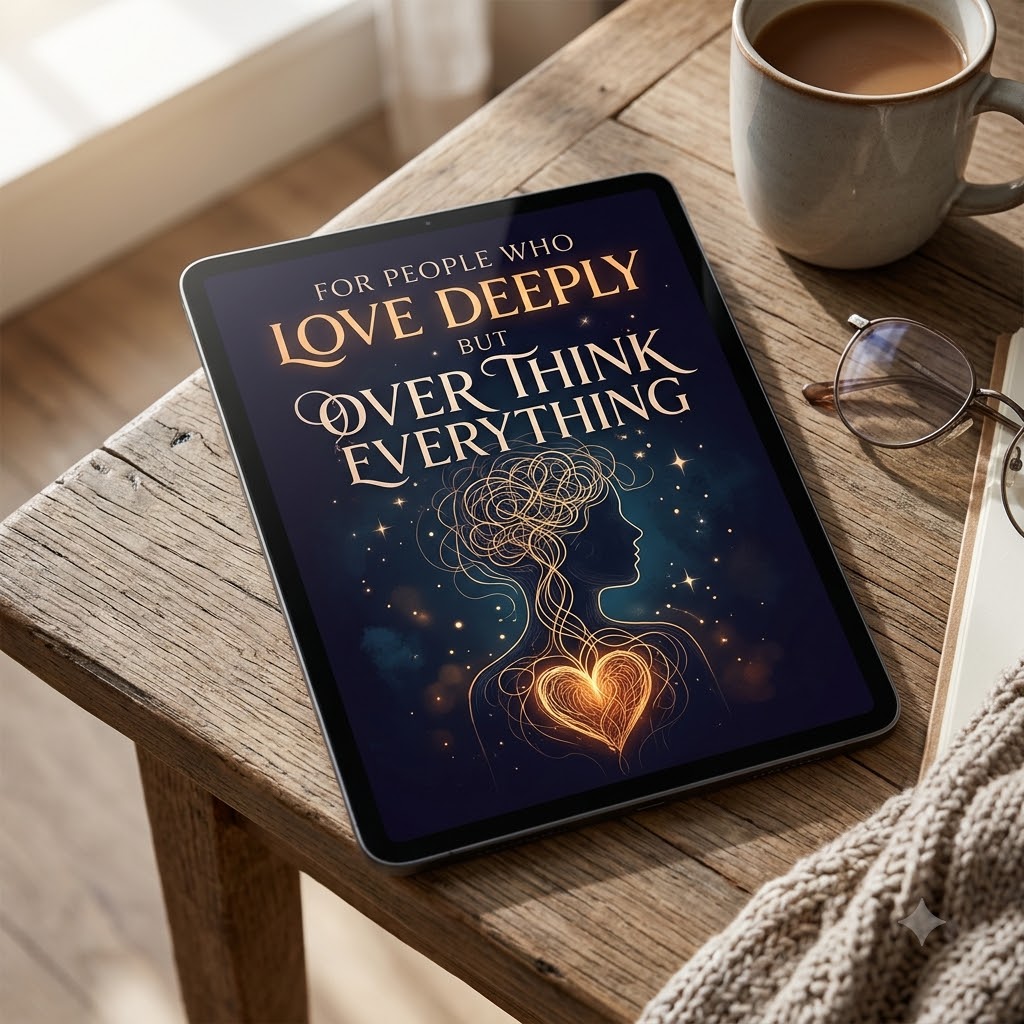
"A little more peace. A little less overthinking. A healthier relationship with your own thoughts."
The Opportunity
What if love could feel lighter?
Imagine receiving a message without spending the next hour analyzing its tone.
Imagine having a difficult conversation without replaying every word afterward.
Imagine giving someone space without automatically assuming something is wrong.
Imagine caring deeply while still feeling secure in yourself.
You deserve relationships where you can be present instead of constantly preparing for something to go wrong. You deserve to enjoy the good moments without mentally searching for hidden problems.
That's the opportunity: learning to approach love with more awareness, self-compassion, and emotional clarity.
The Problem
When your heart feels everything and your mind won't switch off
Maybe some of these moments feel familiar.
You reread messages, searching for a hidden meaning.
A short reply or a change in someone's tone leaves you wondering whether you've done something wrong.
You replay conversations long after they've ended.
You worry about losing people who mean the world to you.
You sometimes need reassurance, but feel uncomfortable asking for it.
You imagine worst-case scenarios even with no clear evidence anything is wrong.
You blame yourself for things you may not have done.
You struggle to enjoy a good moment because you're already worrying about what's next.
You know you're overthinking — but knowing that doesn't always make it stop.
If this sounds familiar, it doesn't mean you're broken, too needy, or incapable of a healthy relationship. It may mean you've developed patterns that deserve understanding — not judgment.
The Unique Method
Understand your thoughts without letting them run your life
Instead of pressuring yourself to stop caring, the goal is to understand what's happening inside you and explore healthier ways to respond. Three important shifts:
Recognize the overthinking loop
Start noticing when a thought becomes a cycle of assumptions, repeated analysis, and imagined outcomes. Recognizing the pattern gives you a chance to respond more deliberately.
Separate what you know from what you fear
A delayed reply is something you can observe. The belief that it means someone no longer cares is an interpretation. Learning the difference helps you approach uncertainty more thoughtfully.
Respond with self-compassion and clarity
Rather than criticizing yourself for feeling anxious, begin exploring more supportive responses — pausing before reacting, communicating openly, and giving yourself time to process.
The aim isn't to promise you'll never overthink again. It's to help you build a more understanding relationship with your mind — one moment at a time.
The Results
What you can begin working toward
With reflection and consistent practice, you can begin working toward a different experience of love and connection.
Notice when you're caught in a cycle of overthinking.
Question assumptions before treating them as facts.
Spend less time replaying conversations.
Communicate your needs more clearly.
Respond to uncertainty with more patience.
Treat yourself with less blame when difficult emotions arise.
Enjoy meaningful moments without analyzing everything.
Remember your worth isn't determined by another person's every response.
These are goals to work toward, not guaranteed overnight transformations. Your experience will depend on your circumstances, starting point, and how you use the material.
What's Inside
A self-paced guide you can return to
The eBook
A self-paced guide you can read in your own time, revisit when familiar patterns show up, and use as a starting point for personal reflection.
Practical insights for everyday situations
Explore common moments that trigger overthinking — from ambiguous messages to difficult conversations and relationship uncertainty.
A gentler way to understand yourself
Reflect on why certain situations affect you so deeply without turning every emotional reaction into another reason to criticize yourself.
Small steps toward a calmer response
Explore ways to pause, examine your assumptions, and choose a thoughtful next step instead of following every anxious thought.
Four gentle companions for the overthinking heart
Included free with your copy — practical tools you can reach for the moment your mind starts to loop.
The 5 Love Overthinking Triggers Cheat-Sheet
A quick-reference guide to the five most common triggers that send your mind into a loop — and how to spot each one in real time.
Red Flag vs. Overthinking Checklist
A clear, honest checklist to help you tell the difference between a real concern worth acting on and a thought your mind is amplifying.
The 24-Hour Calm Reset Routine
A simple day-long routine to steady yourself after a spiral — small, grounding steps you can return to whenever the noise gets loud.
Mini Workbook: Emotional Clarity Pages
Gentle reflection prompts to help you separate what you know from what you fear, and choose your next step with more calm.
Your Offer
Get the eBook today
Your next step toward a gentler relationship with your thoughts.
- The complete eBook: For People Who Love Deeply But Overthink Everything
- All 4 bonus companions included free
- Digital access — read on phone, tablet, or computer
- Self-paced reading — return to the ideas whenever you need a reminder
Secure checkout. Instant digital delivery. No complicated routine required — start by reading, reflecting, and choosing one idea to put into practice.
Instant digital access • Read at your own pace
Guarantee & Risk Reversal
Make an informed decision with confidence
You may be wondering whether this eBook will be useful for your situation. That's a fair question. This guide is intended as educational and reflective material — not a promise that every worry will disappear, and not a substitute for professional mental health support when you need it.
We want you to feel good about your purchase. Review the refund policy at checkout — if it's not the right fit, contact us and we'll help. You deserve to know what you're purchasing and what to expect.
FAQ
Frequently asked questions
You can care deeply and still make space for yourself
You don't have to become a different person to experience love differently. You can start by understanding yourself with a little more patience — and remembering that your capacity to love deeply doesn't have to come at the expense of your own peace.
Start where you are. Give yourself permission to learn a gentler way forward.